Shanghai & Jiangnan
A Guanscape Sample Journey
Between skylines and Waterways
Suggested pace: 8 days / 7 nights
Shanghai · Hangzhou · Suzhou
From Shanghai’s layered streets and waterfront skyline to Suzhou’s garden courtyards and Hangzhou’s tea-covered hills, this journey traces the quieter cultural landscapes of eastern China.
Move between contemporary city life, classical design, canal towns and slow rituals—shaped around your interests, energy and preferred pace.
THE CULTURAL LANDSCAPES OF JIANGNAN
A city that opens onto water
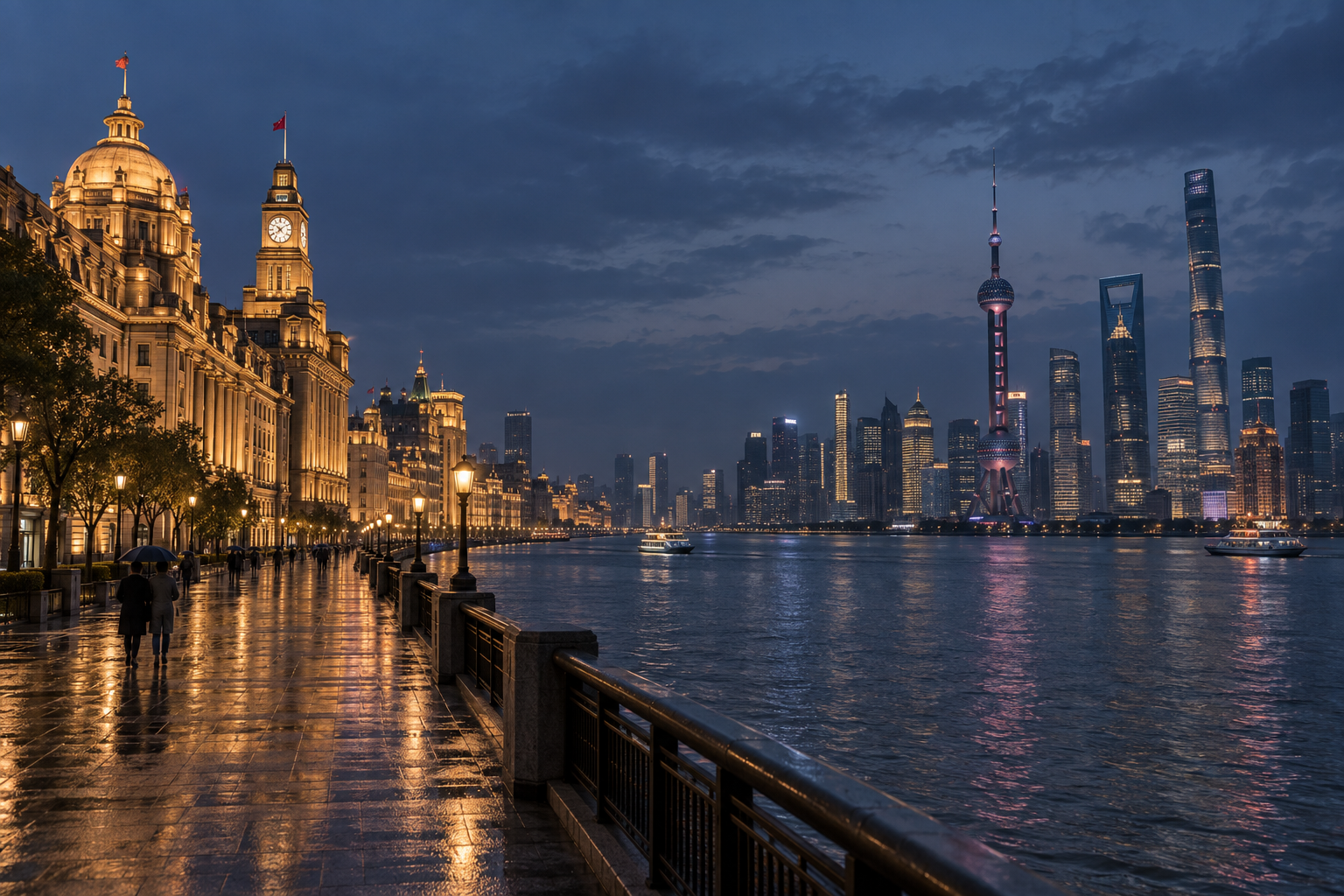
Shanghai is often introduced through its skyline, but its character lies equally in its layers: Art Deco façades, lane-house neighbourhoods, old villas beneath plane trees, independent cafés, galleries and a food culture shaped by migration and reinvention. It is a city that rewards wandering as much as it does arrival.
Shanghai has long been shaped by its position between river and sea. The Huangpu connected the city to maritime trade, while the wider Yangtze River Delta linked it to a network of towns, crafts and food traditions. This dual outlook—rooted in the region yet open to outside influences—helps explain why Shanghai feels both distinctly local and continually in motion.
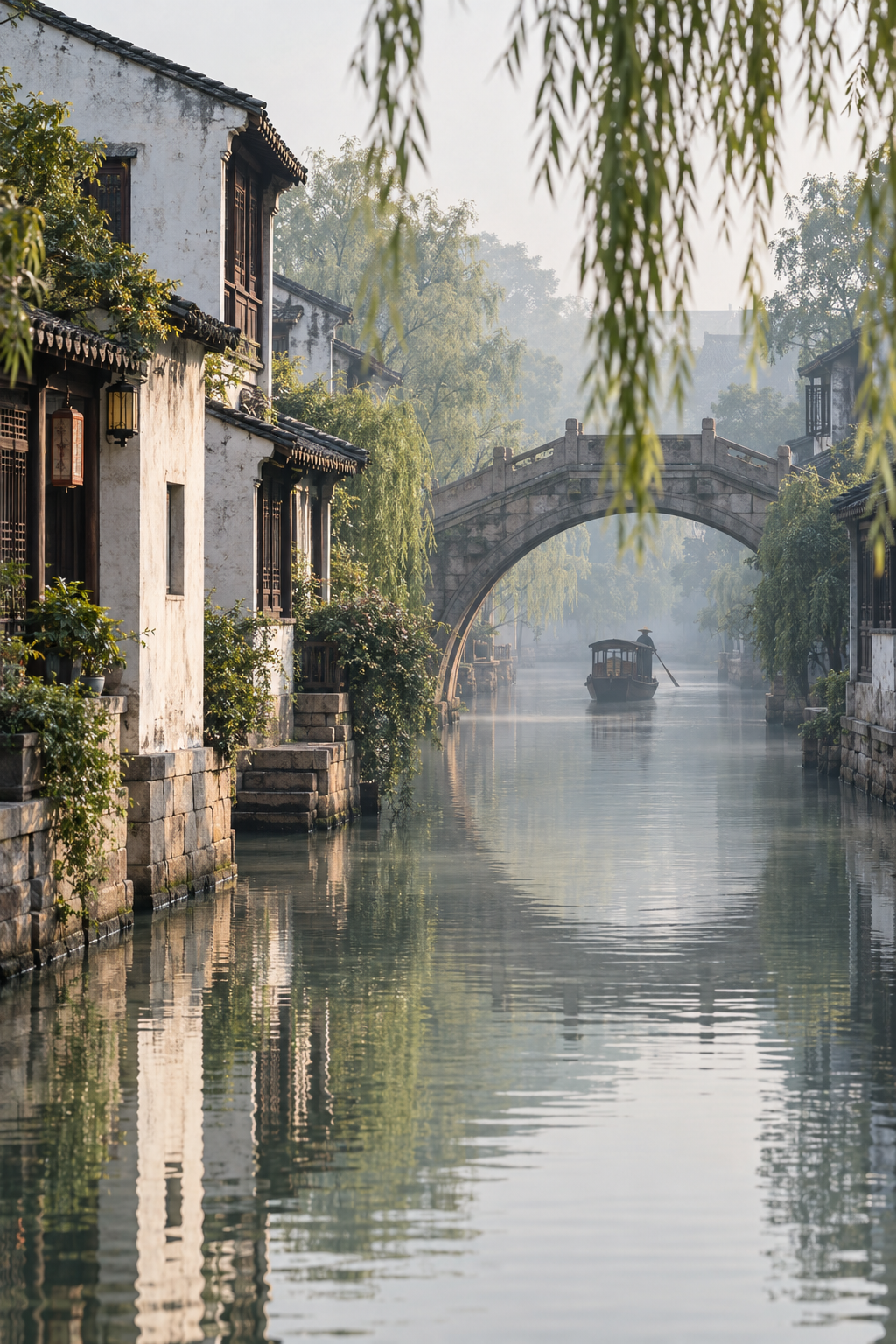
Beyond Shanghai, the landscape softens into Jiangnan—the water-rich region long associated with gardens, canals, silk, tea and a distinctive culture of refinement. Here, beauty is found not in scale, but in proportion: a framed garden view, a curved bridge over still water, a cup of spring tea, the sound of music drifting from a teahouse.
Hangzhou and Suzhou offer two different expressions of this world. Hangzhou opens onto lakes, wooded hills and Buddhist landscapes, while Suzhou draws you inward through canals, courtyards and classical gardens. Together with Shanghai, they create a journey between the contemporary and the timeless—through the places where eastern China’s urban imagination, craft traditions and everyday pleasures meet.
From City Streets to Tea Hills
Every Guanscape journey is shaped around the traveller. This is one possible way to experience Shanghai & Jiangnan.
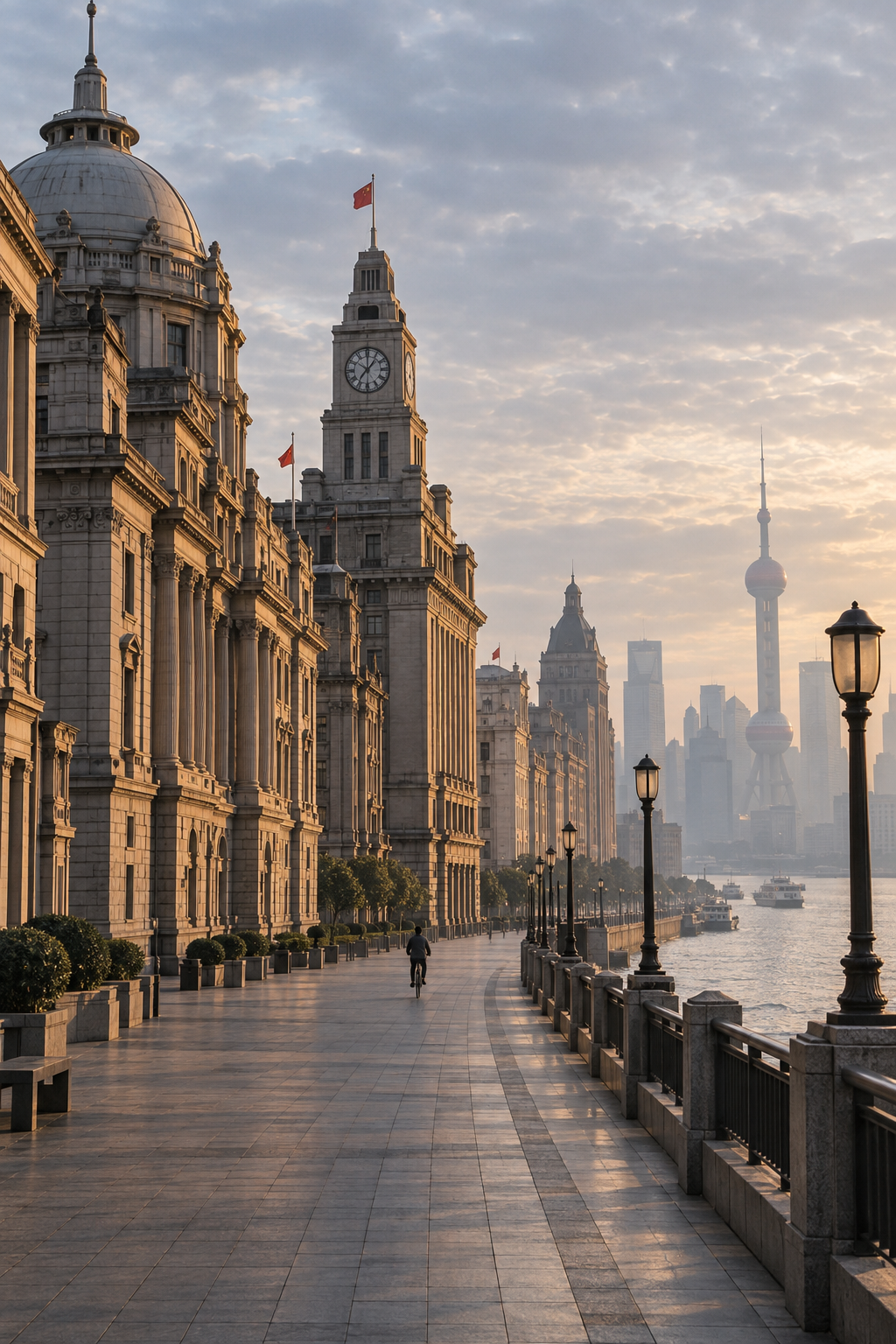
Arrive in Shanghai and settle into a considered base in the former French Concession, the Bund or another neighbourhood that suits your preferred rhythm.
Keep the first evening unhurried: a gentle walk, an aperitif with a view, or a first meal that introduces the city through its flavours. Shanghai is a city best entered gradually—allowing its scale, energy and contrasts to reveal themselves over time.
Arrive in Shanghai
Day 1
Day 2
Begin with the historic waterfront, where the Bund’s early twentieth-century façades face the evolving skyline of Pudong across the Huangpu River. From here, Shanghai’s different eras sit in conversation: treaty-port ambition, commercial reinvention and contemporary global confidence.
Continue through a mix of quieter lanes, independent galleries, design spaces or neighbourhood markets, depending on your interests. The day can be shaped around architecture, food, contemporary art or simply the pleasure of walking a city whose most revealing details are often found between the landmarks.
Shanghai, in layers
Spend time in the former French Concession, where leafy avenues and former villas give way to lane houses, small studios, cafés and neighbourhood restaurants. This is one of Shanghai’s most enjoyable areas to explore slowly and without a fixed agenda.
Browse independent shops, pause for coffee beneath the plane trees and take in the quieter, lived-in texture of the city. Later, explore Shanghai’s food culture through a private tasting, market visit or a dinner chosen around your interests—from classic Shanghainese cooking to the city’s more contemporary tables.
French Concession & everyday Shanghai
Day 3
Travel by high-speed rail to Hangzhou, where Shanghai’s vertical energy gives way to lake landscapes, wooded hills and a more contemplative pace. Settle in before taking a first gentle walk around West Lake.
Its causeways, temples, pavilions and shifting mountain views have shaped Chinese poetry and painting for centuries. Rather than trying to see everything at once, use the afternoon simply to enter the rhythm of the place: walking beside the water, pausing for tea or taking in the landscape as evening begins to settle over the lake
Shanghai to Hangzhou: arriving at Westlake
Day 4
Spend the day in the forested hills west of Hangzhou, beginning at Lingyin Temple—one of China’s most important Buddhist sites. Set beneath wooded slopes, its halls, incense-filled courtyards and ancient trees offer a very different experience of the region from the formal gardens and dense streets of Shanghai.
Nearby, the Buddhist carvings at Feilai Feng reveal centuries of devotional art cut directly into the limestone. Depending on your interests and pace, the day can continue with a quieter temple visit, a short hillside walk or time in one of Hangzhou’s smaller, less hurried neighbourhoods before returning to the city for dinner.
Lingyin Temple & the Buddhist landscape
Day 5
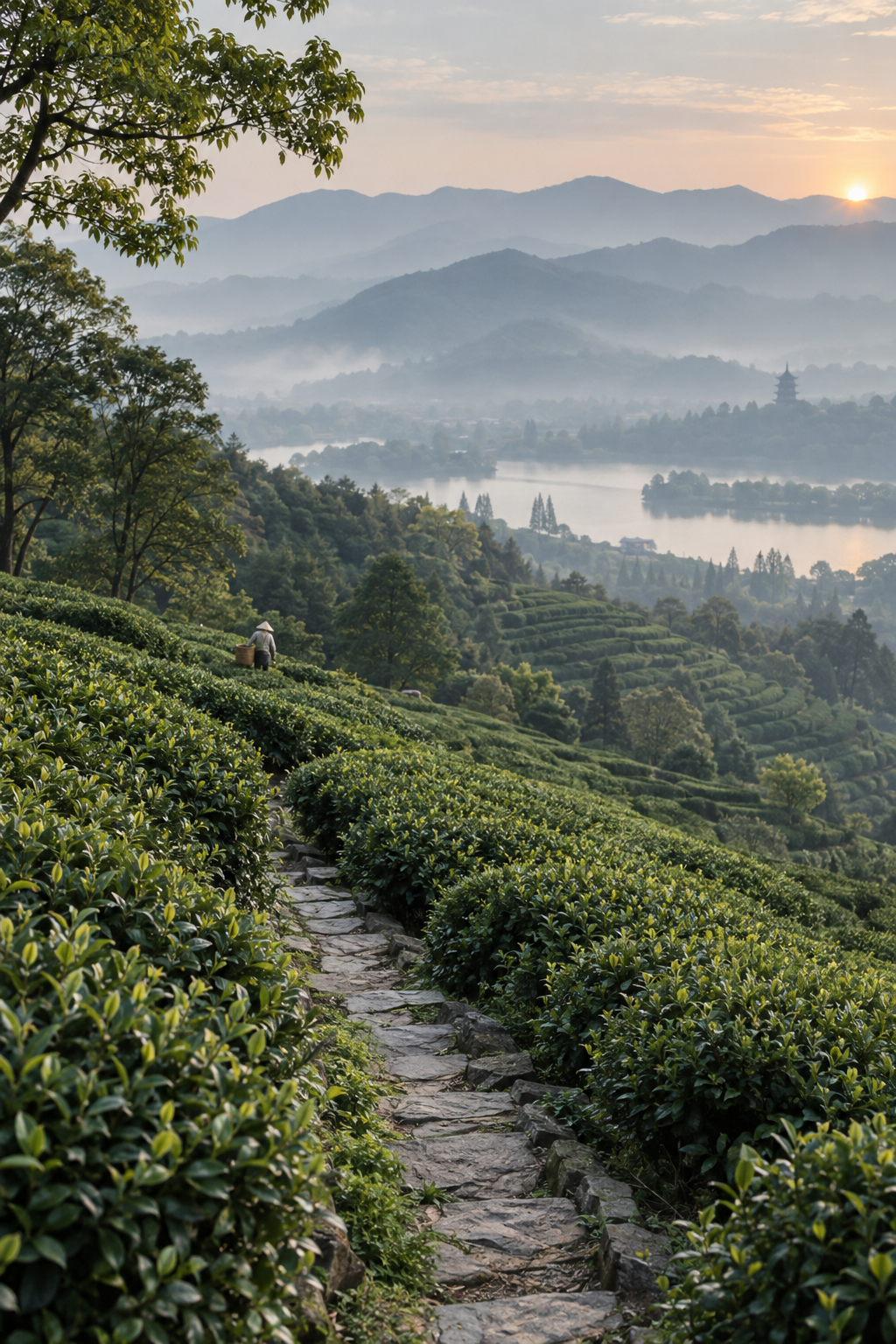
Travel into the hills around Longjing, where one of China’s most celebrated green teas grows in carefully tended terraces above Hangzhou. Here, the city feels close but distant: tea bushes follow the contours of the hills, while small villages and tea houses reflect a way of life shaped by season, landscape and craft.
Meet the region through a private tea experience, a gentle walk or an unhurried lunch of local dishes. There is room to keep the afternoon open— a quieter West Lake path or time simply to linger over tea and views across the hills.
Longjing tea hills & a slower Hangzhou
Day 6
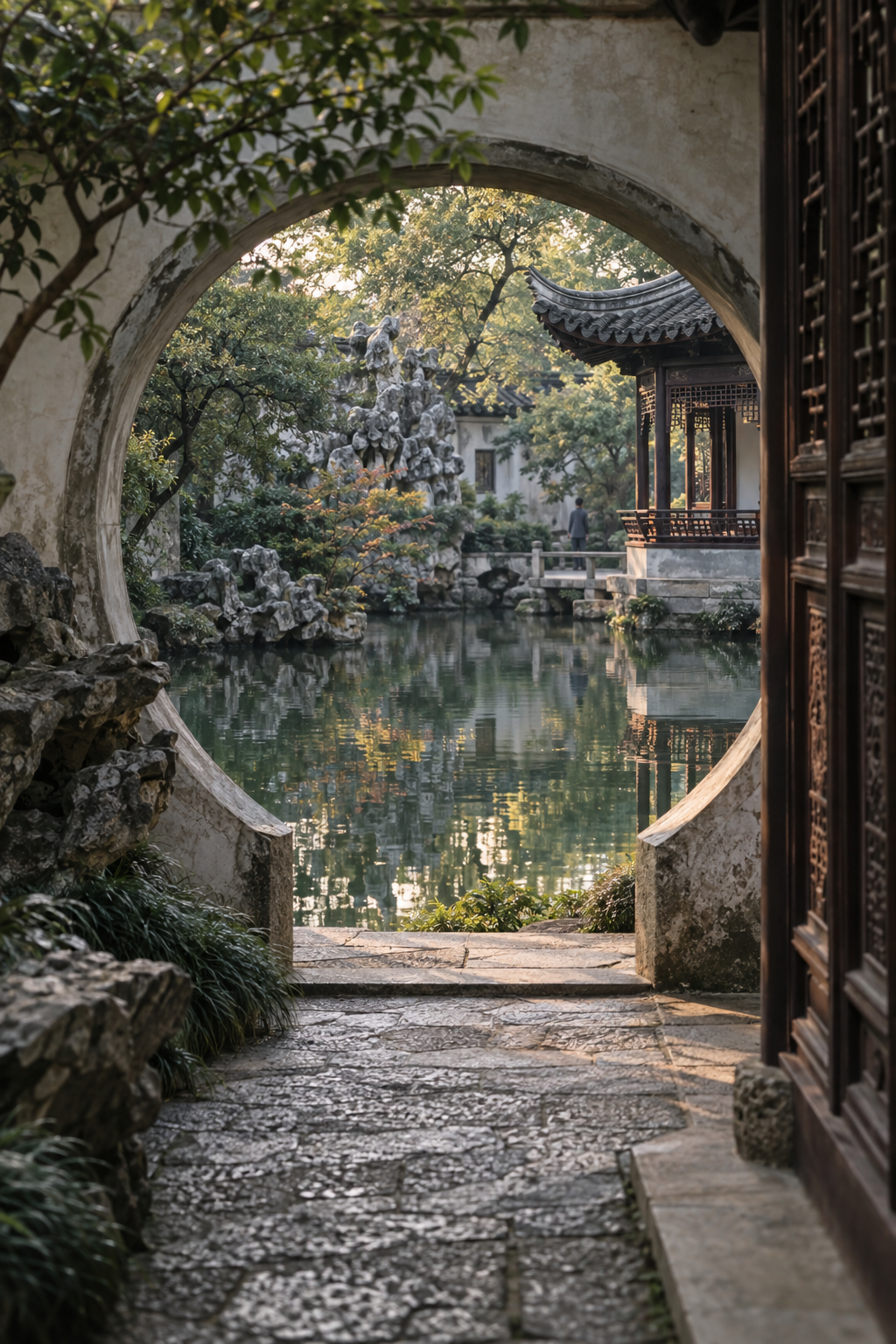
Travel north to Suzhou, a city long celebrated for its classical gardens, canals, silk traditions and refined domestic architecture. The shift is subtle but distinctive: Hangzhou opens outward into lake and hillside landscapes, while Suzhou draws you inward through courtyards, water lanes and carefully composed views.
Begin with a classical garden selected for its particular character—where pavilions, ponds, rockeries and framed windows turn landscape into an art form. Later, wander the older quarters around Pingjiang Road, following narrow lanes and canals where the pace of everyday life still unfolds beside the water.
In the evening, experience pingtan, Suzhou’s distinctive storytelling and musical tradition. Performed with voice, pipa and sanxian, it is intimate, lyrical and deeply rooted in Jiangnan’s cultural life—a memorable way to encounter Suzhou beyond its architecture.
Hangzhou to Suzhou: gardens & canals
Day 7
Day 8
Take a final morning at an unhurried pace. You may return to a quieter canal lane, visit a small museum or craft studio, enjoy a relaxed breakfast in the old city, or simply leave space to absorb Suzhou’s slower rhythm before continuing onward.
From Suzhou, travel on to Shanghai for an international departure, extend the journey with further time in the city, or continue into another part of China. The route can also be adapted to include Huangshan, Nanjing or additional nights beside West Lake for travellers who would prefer an even slower Jiangnan experience.
One final Suzhou morning & onward travel
MAKE IT YOUR OWN
Shape your journey through Shanghai & Jiangnan
This route is a starting point, not a fixed itinerary.
We can slow it down, extend time in Shanghai, add a canal-town stay, or focus more deeply on architecture, art, food, tea or garden culture. Continue onward to places such as Huangshan, Nanjing, Wuyishan or Beijing.
Begin with your dates, interests and preferred pace.
We will shape the route, stays and experiences around you.