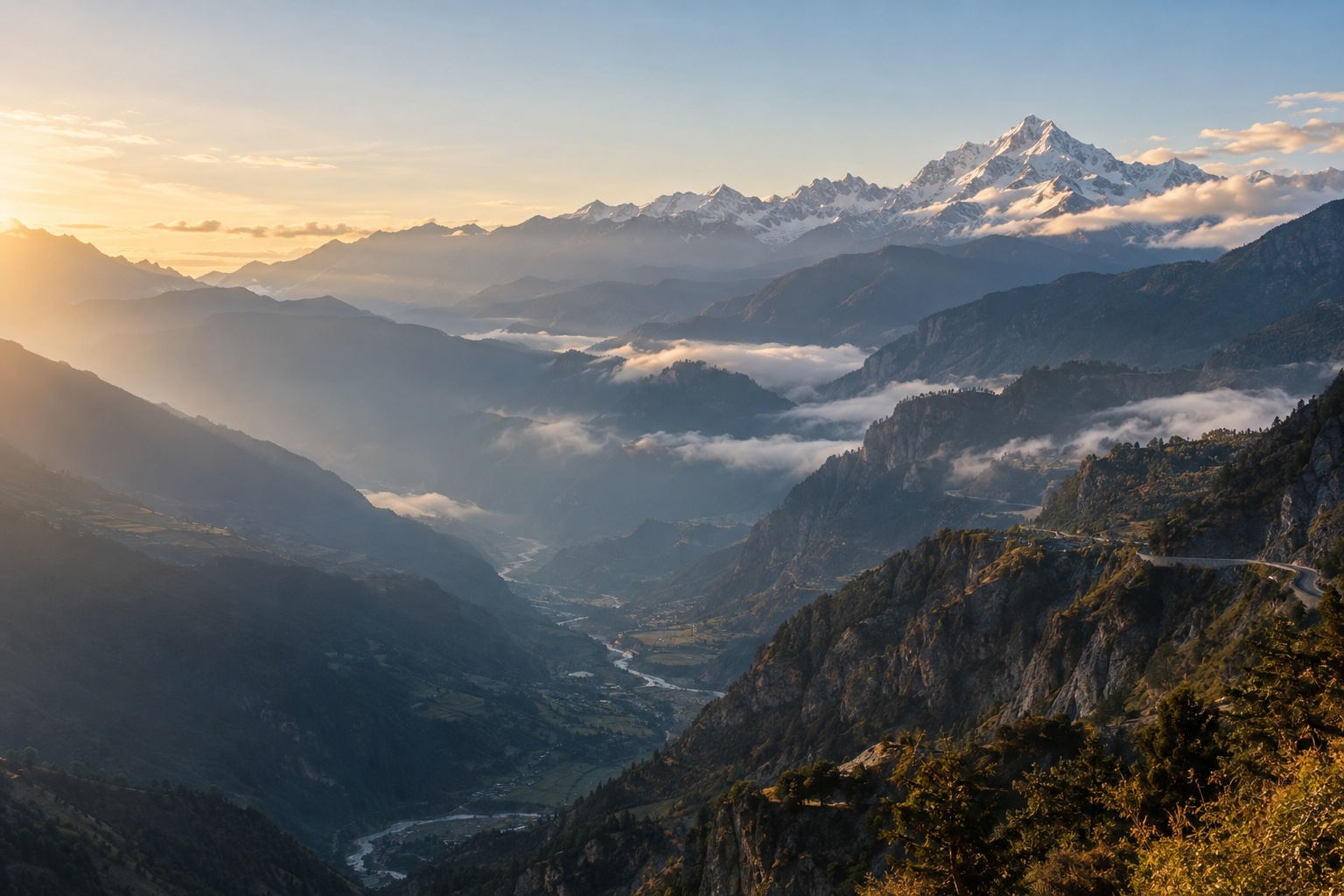
Yunnan & Beyond
A Guanscape Sample Journey
From the City of Eternal Spring to Snow-Capped Mountains
Suggested pace: 10 days / 9 nights
Kunming · Dali · Tiger Leaping Gorge · Shangri-La
Travel through one of China’s most geographically and culturally varied regions, moving from Kunming’s spring-like plateau climate to Dali’s lakeside landscapes and the high-altitude valleys of Shangri-La.
Along the way, encounter Bai craft traditions, tea and market culture, dramatic mountain roads and Tibetan Buddhist landscapes—at a pace that leaves room to settle into each place.
A REGION OF CHANGING LANDSCAPES
From lake country to the Tibetan Plateau

Yunnan sits in China’s southwest, where the landscapes change quickly: from Kunming’s highland city and fertile valleys to Dali’s lakeside plains, mountain passes and the grasslands of Shangri-La. It is a region shaped by movement—of trade, migration, pilgrimage and exchange across some of China’s most dramatic terrain.
Kunming is often known as the City of Eternal Spring, a relaxed plateau capital whose markets, gardens and food culture make it a natural entry point. Further west, Dali opens between Erhai Lake and the Cangshan mountains, where Bai architecture, craft traditions and a slower rural rhythm give the region its distinctive character.
Yunnan is also home to many distinct communities, each with their own languages, architectural traditions, foodways and religious practices. Rather than treating this diversity as something to simply observe, the journey encounters it through everyday life: market mornings in Kunming, Bai craft traditions around Dali, and the Tibetan Buddhist landscapes of Shangri-La.
Beyond Dali, the road rises through the Jinsha River valley and Tiger Leaping Gorge towards Shangri-La, at the edge of the Tibetan Plateau. Here, monasteries, highland pastures, forested valleys and Tibetan-influenced cultural life bring a different texture to the journey.
The pleasure of Yunnan is not in trying to cover everything. It is in allowing the route to unfold gradually—through changing food, weather, languages, architecture and ways of life.
From Spring City to Highland Valleys
Every Guanscape journey is shaped around the traveller. This is one possible way to experience Yunnan & Beyond.
Arrive in Kunming and settle into your hotel, keeping the first day deliberately light after the journey. Kunming’s mild climate and slower pace make it an easy place to begin.
Depending on your arrival time, take a short walk through the old city or enjoy a first dinner shaped around Yunnan’s distinctive ingredients—perhaps wild mushrooms, seasonal vegetables or rice noodles.
Arrive in Kuming
Day 1
Day 2
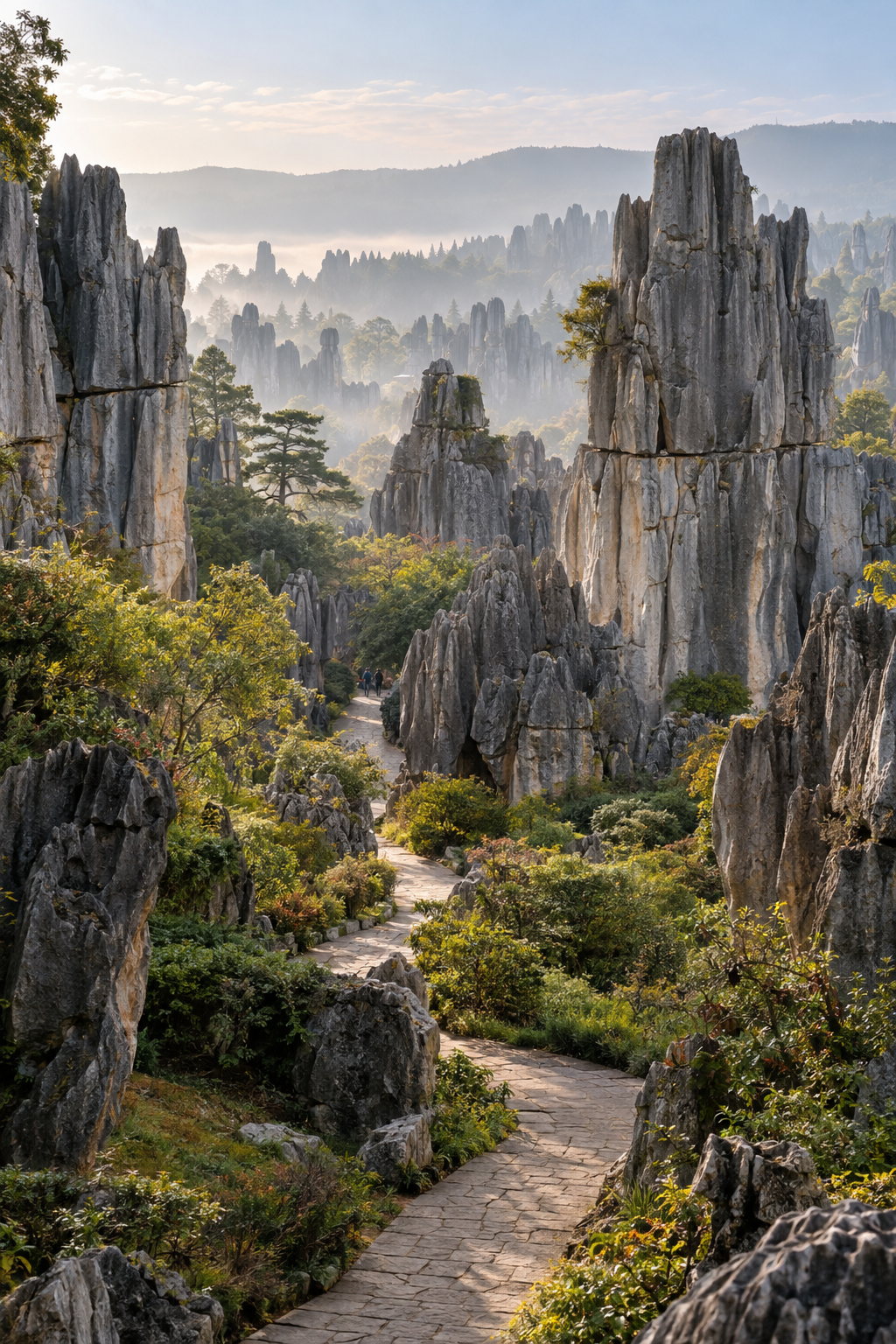
Take a day trip beyond the city to the Stone Forest, a striking karst landscape of limestone pinnacles formed over millions of years. The visit can be paced gently, with time for easy walking and a relaxed lunch rather than trying to cover every section.
Return to Kunming and spend time exploring Xunjin Street, a characterful inner-city area where older streets and former factory buildings now sit alongside cafés, bookstores, small design spaces and local life. It offers a more contemporary, lived-in view of the city before dinner.
Stone Forest & Streets of Kunming
Begin the morning at Dounan Flower Market, widely regarded as Asia’s largest fresh-cut flower market. The scale, colour and everyday energy of the market offer a vivid introduction to Yunnan’s long connection with flowers, agriculture and trade.
Later, return towards central Kunming for time around Cuihu (Green Lake). Wander the tree-lined streets and smaller lanes surrounding the water, then settle in for a leisurely lunch nearby before continuing by high-speed rail to Dali. Arrive in the evening and settle into a countryside or lakeside base.
Flowers, Green Lake & onward to Dali
Day 3
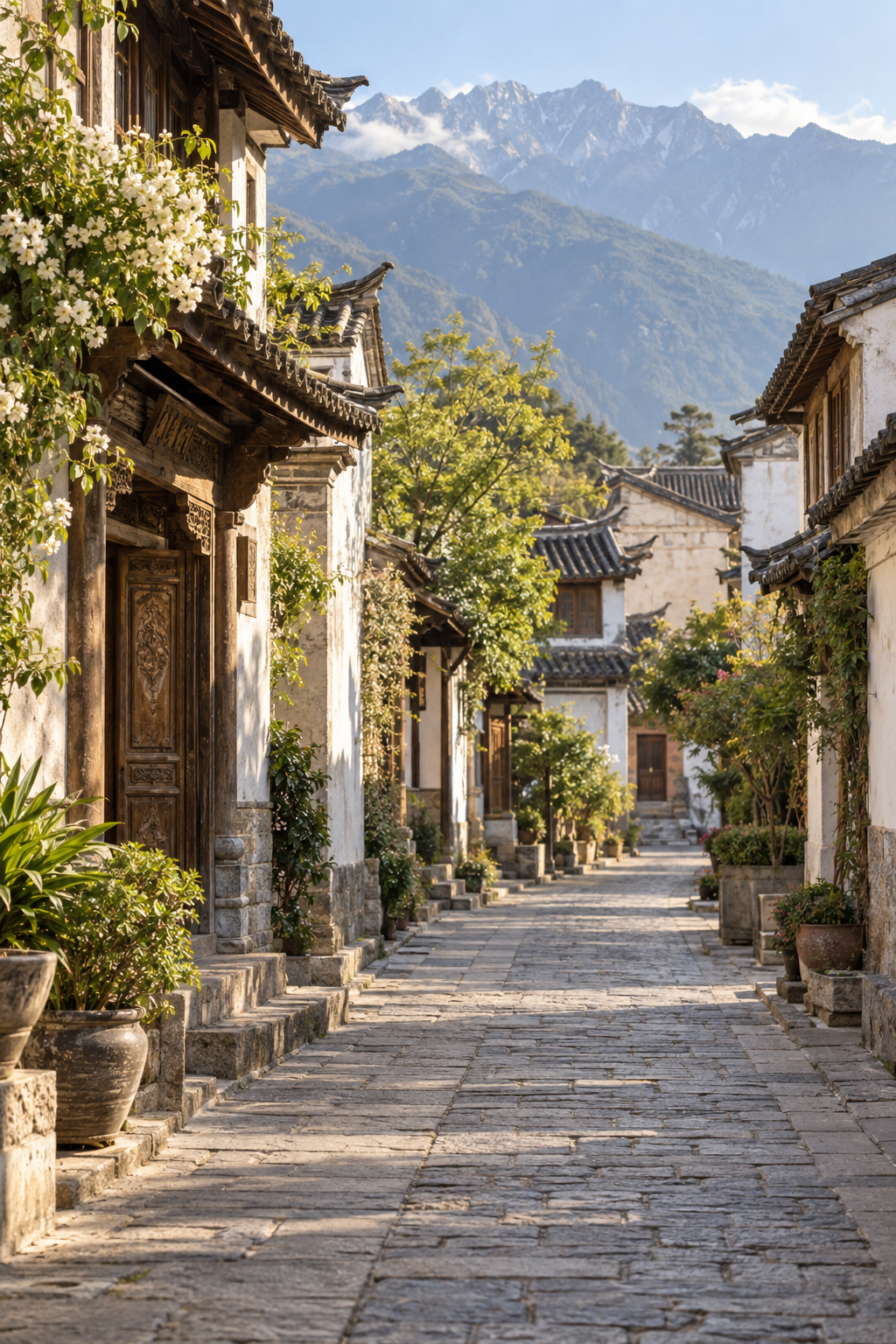
Explore Xizhou, a historic town known for its Bai architecture, courtyards and long connection to trade across the region. Depending on your interests, visit a local market or take part in a small craft experience—such as tie-dye, weaving, incense-making or traditional printmaking.
Later, continue to Dali Ancient Town for time to wander, pause in a teahouse or explore its quieter backstreets. Return to your hotel in the evening, with space to enjoy the countryside after dark.
Xizhou, Bai culture & Dali Ancient Town
Day 4
Day 5
Spend the day around Erhai Lake, following its western and eastern shores at an unhurried pace. The route can include small villages, viewpoints, local food stops and time in Shuanglang or another lakeside settlement, depending on the atmosphere you prefer.
This is intentionally a flexible day: suitable for gentle cycling, a private drive around the lake, a long lunch or time simply to enjoy the changing light across the water and Cangshan mountains.
Erhai & a slow day in Dali
Leave Dali and travel north through increasingly dramatic mountainTake a full-day excursion north to Shaxi, a remarkably well-preserved former trading town on the Tea Horse Road. Set within a broad valley, Shaxi has a different character from Dali: quieter, more rural and shaped by the long-distance exchange of tea, horses, salt and textiles between Yunnan, Tibet and beyond.
Spend time around Sideng Square, its old theatre stage, temple buildings and surrounding lanes, before enjoying a simple local lunch and the slower rhythm of the valley. This is a longer day by road, but a rewarding one for travellers drawn to history, vernacular architecture and places that still feel quietly removed from the main route.
Shaxi: an old caravan-town landscape
Day 6

Leave Dali and travel north towards Shangri-La, as the landscape becomes increasingly mountainous and the road follows the dramatic valleys of northwest Yunnan.
Stop at Tiger Leaping Gorge, where the Jinsha River forces its way between immense mountain walls in one of the world’s deepest river gorges. It is a truly magnificent change of scale: powerful, exposed and markedly different from Dali’s gentler lake country.
Continue onwards to Shangri-La, arriving in the late afternoon or evening. As the altitude rises, keep the evening light and allow time to settle in comfortably.
Through Tiger Leaping Gorge to Shangri-La
Day 7
Begin slowly in Shangri-La, allowing time to adjust to its high-altitude setting. Explore Dukezong Old Town, where Tibetan-influenced architecture, prayer flags and hillside views offer a first introduction to the town’s atmosphere.
The day can include a gentle walk, a visit to Guishan Park, time in a local café or teahouse, and a relaxed dinner. The aim is not to over-programme the first full day, but to let the landscape and altitude register.
Shangri-La, at an unhurried pace
Day 8
Day 9
Visit Songzanlin Monastery, one of the region’s most significant Tibetan Buddhist sites. Set above the surrounding valley, its layered rooftops, prayer halls and mountain setting offer a meaningful introduction to the religious life of the plateau.
Later, travel through the landscapes around Shangri-La—perhaps towards Napa Lake and its seasonal grasslands—where the pace of the day can be shaped around photography, wildlife, gentle walking or simply time in the open landscape
Songzanlin Monastery & the plateau landscape
Day 10
Enjoy a final morning at a relaxed pace before your onward flight, typically connecting through Kunming. Depending on flight timings, there may be time for a last walk in the old town, a slow breakfast or a final view across the surrounding hills.
Because Shangri-La sits at high altitude, we build the first day there at a gentler pace and tailor activities around each traveller’s comfort and energy.
Final morning in Shangri-La
MAKE IT YOUR OWN
Shape your journey through Yunnan
This route is a starting point, not a fixed itinerary.
We can slow the journey down, add more time beside Erhai Lake, deepen the focus on food, craft, tea, walking or Tibetan Buddhist culture, or extend onward to places such as Lijiang, Shaxi, the Meili Snow Mountains or Sichuan.
Begin with your dates, interests and preferred pace.
We will shape the route, stays and experiences around you.